
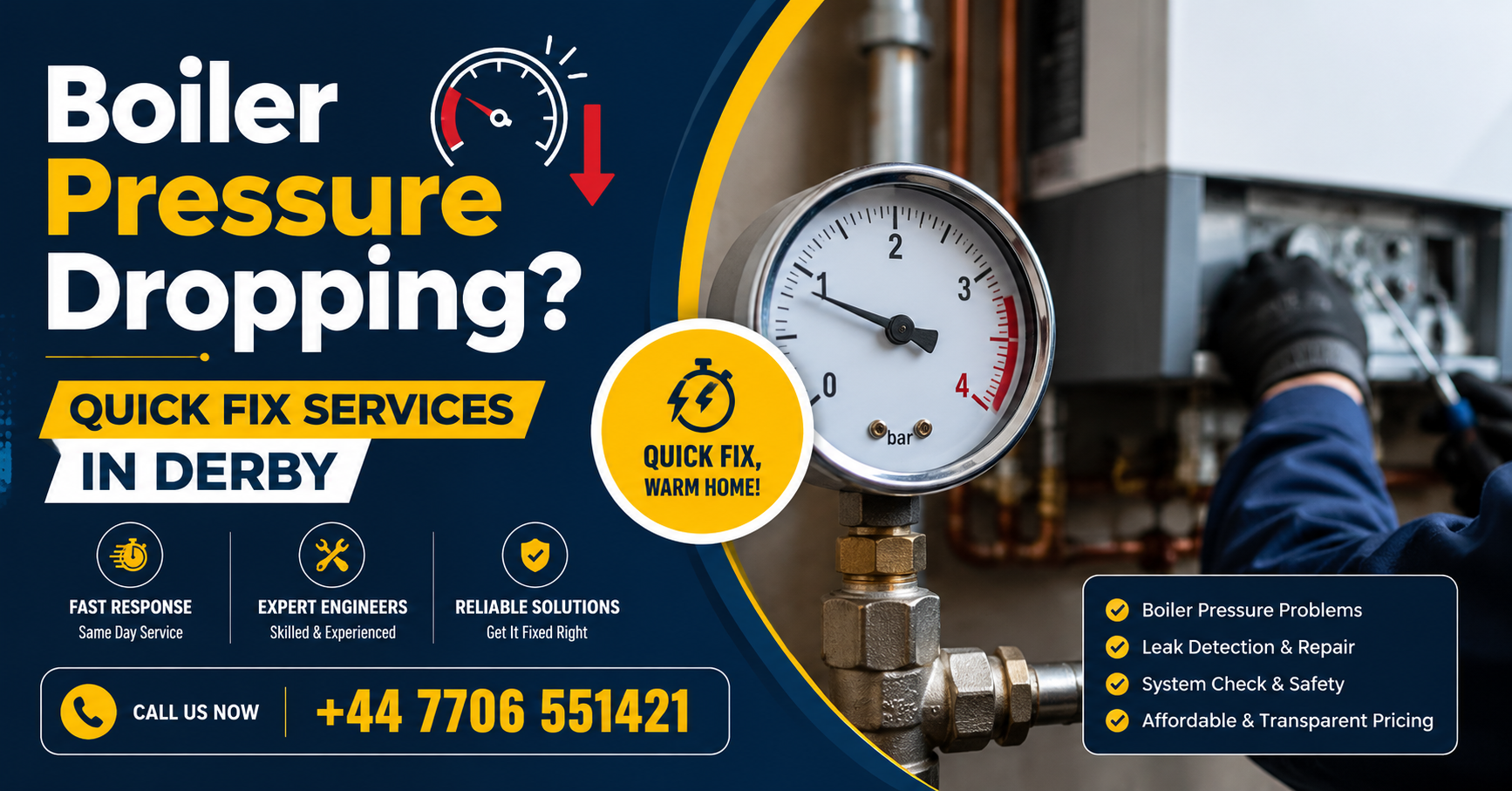
Boiler Pressure Dropping? Quick Fix Services in Derby
Understanding Boiler Pressure and Why It Matters
A boiler is one of the most important systems in any home, especially during Derby’s colder months when reliable heating and hot water become essential for comfort. Among the many factors that influence boiler performance, boiler pressure is one of the most critical. When pressure falls below the recommended level, your boiler may struggle to circulate hot water effectively through radiators and taps, resulting in poor heating performance and potential system faults.
Most modern combi and system boilers rely on a sealed heating circuit. This sealed environment requires a specific pressure range to operate correctly. When pressure drops unexpectedly, it often signals an underlying issue that should not be ignored. Homeowners frequently notice warning lights, error codes, cold radiators, or intermittent heating when pressure falls too low.
Industry experts generally recommend keeping boiler pressure within the manufacturer’s specified range to ensure maximum efficiency and safety. According to guidance from major boiler manufacturers, maintaining proper pressure helps reduce strain on components and improves overall system longevity. Ignoring recurring pressure loss can eventually lead to costly repairs or complete boiler failure.
For Derby homeowners, understanding the causes of pressure loss and knowing when to seek professional assistance can save both time and money. Quick intervention often prevents minor issues from developing into major heating emergencies. Whether the problem stems from a simple pressure adjustment or a hidden leak, identifying the cause early is always the smartest approach.
What Is Normal Boiler Pressure?
Most residential boilers operate efficiently when the pressure gauge reads between 1.0 and 1.5 bar while the system is cold. When the heating is running, pressure may naturally increase to around 2.0 bar. These figures can vary slightly depending on the boiler manufacturer and model.
The pressure gauge is usually located on the front of the boiler and provides a quick visual indication of system health. Many boilers also include a green zone that highlights the ideal operating range. If the needle falls below this zone, the boiler may stop working altogether as a safety precaution.
Understanding these pressure readings allows homeowners to spot issues before they become serious. A single pressure drop after radiator bleeding may not indicate a major problem. However, repeated pressure loss often suggests a fault somewhere within the system.
Signs Your Boiler Pressure Is Too Low
Low boiler pressure usually presents several noticeable symptoms. The most common sign is a pressure gauge reading below 1 bar. However, other indicators often appear before homeowners check the gauge.
You might notice radiators taking longer to heat up, uneven heating throughout the property, or reduced hot water performance. Some modern boilers display warning messages or fault codes specifically related to low pressure. In severe cases, the boiler may shut down completely.
Recognizing these warning signs early can help prevent disruption to your household and reduce the likelihood of expensive repairs.
Common Reasons Boiler Pressure Keeps Dropping
Recurring pressure loss is one of the most common boiler issues reported by homeowners across Derby. While occasional pressure fluctuations can occur naturally, frequent drops generally point to a fault that requires investigation.
Water Leaks in the Heating System
Leaks are among the leading causes of pressure loss. Even a tiny leak can gradually reduce system pressure over time. The challenge is that many leaks occur in hidden locations such as under floors, inside walls, or within pipework that is not easily visible.
Signs of a leak may include damp patches, staining, mold growth, or unexplained water accumulation around radiators and pipe connections. Professional leak detection services often use thermal imaging and specialized equipment to identify hidden leaks without causing unnecessary property damage.
A prompt repair not only restores pressure but also prevents structural damage and water wastage.
Bleeding Radiators and Pressure Loss
Bleeding radiators is a routine maintenance task that removes trapped air from the heating system. While beneficial, the process releases small amounts of water, which can lower boiler pressure.
After bleeding radiators, it is usually necessary to repressurise the boiler. Many homeowners forget this step, leading to low-pressure warnings and heating issues. If pressure continues dropping long after radiator bleeding, another underlying problem may be present.
Faulty Pressure Relief Valve
The pressure relief valve (PRV) protects the boiler from excessive pressure. If the valve becomes damaged or stuck open, water can escape continuously, resulting in ongoing pressure loss.
A faulty PRV often leaves visible signs such as water dripping from an external overflow pipe. Because this component plays a vital safety role, repairs should always be carried out by a qualified heating engineer.
Expansion Vessel Problems
The expansion vessel helps accommodate changes in water volume as the heating system warms up and cools down. When the vessel loses its internal air charge or develops a fault, pressure fluctuations become more common.
Symptoms may include pressure rising significantly when the heating is on and dropping sharply once the system cools. Professional diagnostics are typically required to confirm expansion vessel issues and carry out appropriate repairs.
How Low Boiler Pressure Affects Your Home
Low boiler pressure can create a range of problems that extend beyond simple inconvenience. Many homeowners underestimate the impact until heating performance noticeably deteriorates.
Reduced Heating Efficiency
When pressure falls below the recommended level, hot water circulation becomes less effective. Radiators may remain partially cold, rooms may heat unevenly, and the boiler may work harder to maintain comfortable temperatures.
This inefficiency affects both comfort and system performance. The longer the issue persists, the greater the strain placed on internal components.
Higher Energy Bills
A struggling boiler often consumes more energy to deliver the same level of heating. Poor circulation means heat distribution becomes less efficient, forcing the system to operate for longer periods.
Over time, this increased energy consumption can contribute to noticeably higher utility bills. Addressing pressure problems promptly often restores efficiency and reduces unnecessary energy usage.
Risk of Boiler Breakdown
Persistent pressure loss can eventually contribute to more serious mechanical issues. Components may experience additional stress, and safety systems may repeatedly activate.
Unexpected boiler breakdowns are particularly problematic during winter when demand for heating services is highest. Early diagnosis and repair significantly reduce the likelihood of emergency failures.
Quick Fix Services Available in Derby
Professional heating engineers throughout Derby provide a variety of solutions designed to identify and resolve pressure-related boiler issues quickly.
Emergency Boiler Pressure Repairs
Emergency repair services are ideal when heating or hot water has been completely lost. Qualified engineers can rapidly assess the situation, identify faults, and restore system operation.
Many Derby heating companies offer same-day appointments, helping homeowners regain comfort without prolonged disruption.
Leak Detection Services
Specialist leak detection technology allows engineers to locate hidden leaks efficiently. Thermal imaging cameras, acoustic sensors, and pressure testing equipment help pinpoint problem areas accurately.
This targeted approach minimizes disruption while ensuring repairs address the root cause rather than just the symptoms.
Boiler Repressurisation Assistance
Many pressure issues can initially be resolved through proper repressurisation. While some homeowners perform this task independently, professional assistance ensures it is completed safely and correctly.
Engineers can also determine whether repeated pressure loss indicates a deeper issue requiring further attention.
Full Boiler Diagnostics
Comprehensive diagnostics provide a complete assessment of the heating system. Engineers inspect components such as expansion vessels, pressure relief valves, pipework, and heat exchangers.
This detailed evaluation helps identify faults before they escalate into major repairs, potentially saving homeowners significant costs in the long run.
DIY Checks Before Calling a Professional
Before arranging a service visit, homeowners can safely perform a few basic checks that may reveal the cause of pressure loss.
Checking the Pressure Gauge
Start by locating the pressure gauge and confirming the current reading. If pressure is below the recommended range, consult the boiler manual for guidance. Many manufacturers provide specific instructions regarding acceptable pressure levels.
Regular monitoring can help identify patterns and determine whether pressure loss is occasional or persistent.
Repressurising Your Boiler Safely
Many modern boilers include a filling loop that allows homeowners to restore pressure. The process generally involves opening specific valves and monitoring the pressure gauge carefully.
Always follow manufacturer instructions closely. Over-pressurising the system can create additional problems and may trigger safety mechanisms.
Looking for Visible Leaks
Inspect radiators, pipe joints, valves, and areas around the boiler for signs of moisture or dripping water. Even small leaks can gradually reduce pressure over time.
If you discover evidence of leakage, arranging professional repairs quickly is advisable to prevent further damage.
Choosing the Right Boiler Repair Company in Derby
Selecting the right heating engineer can make a significant difference in the quality and reliability of repairs.
Importance of Gas Safe Registration
For any gas boiler work in the UK, Gas Safe registration is essential. Registered engineers possess the necessary qualifications and legal authorization to work on gas appliances safely.
Always verify credentials before scheduling repairs.
Experience and Customer Reviews
Customer reviews provide valuable insight into service quality, reliability, and professionalism. Experienced engineers are often better equipped to diagnose complex pressure-related issues quickly and accurately.
Look for companies with strong local reputations and consistently positive feedback.
Transparent Pricing and Guarantees
Reputable boiler repair providers offer clear pricing structures and explain costs before beginning work. Service guarantees and workmanship warranties provide additional peace of mind and demonstrate confidence in repair quality.
Preventing Future Boiler Pressure Problems
Preventative maintenance remains the most effective way to reduce recurring pressure issues.
Regular Boiler Servicing
Annual servicing allows engineers to inspect critical components, identify wear and tear, and address minor faults before they become significant problems. Manufacturers frequently recommend yearly servicing to maintain efficiency and reliability.
Routine maintenance can also help preserve warranty coverage and extend boiler lifespan.
Monitoring Pressure Levels Throughout the Year
Checking boiler pressure periodically takes only a few seconds but can provide early warning of developing issues. Seasonal changes, maintenance work, and aging components can all influence pressure stability.
By monitoring readings regularly, homeowners can respond quickly when unusual fluctuations occur.
Conclusion
A boiler that continually loses pressure should never be ignored. While simple issues such as radiator bleeding may occasionally cause temporary pressure loss, recurring problems often indicate leaks, faulty valves, expansion vessel faults, or other system defects. Quick action can prevent higher energy bills, reduced heating performance, and expensive breakdowns.
For homeowners in Derby, professional boiler repair services provide fast diagnosis, reliable repairs, and long-term solutions. Whether you need emergency assistance, leak detection, repressurisation, or a complete system inspection, addressing pressure issues early helps keep your home warm, efficient, and comfortable throughout the year.
Frequently Asked Questions
1. Why does my boiler pressure keep dropping every few days?
Frequent pressure loss often indicates a leak, faulty pressure relief valve, or expansion vessel issue. A professional inspection is usually recommended.
2. Can I use my boiler if the pressure is low?
Some boilers may continue operating briefly, but low pressure reduces efficiency and can eventually trigger a shutdown.
3. How often should I check boiler pressure?
Checking the pressure gauge once a month is generally a good practice for identifying issues early.
4. Is repressurising a boiler safe for homeowners?
Many modern boilers can be safely repressurised by homeowners following manufacturer instructions. If pressure drops repeatedly, professional help is advisable.
5. How much does boiler pressure repair cost in Derby?
Costs vary depending on the cause of the issue. Simple repressurisation may be inexpensive, while leak repairs or component replacements can cost more.
