
Why Is My Boiler Losing Pressure? Derby Experts Explain
A boiler that keeps losing pressure can be frustrating, especially when you rely on your central heating and hot water every day. You may notice the pressure gauge gradually falling, a low-pressure warning appearing on the display, or your boiler repeatedly shutting down. In some cases, simply depressurising the system seems to solve the problem—but only temporarily.
So, why is my boiler losing pressure?
There are several possible explanations. A small drop can sometimes happen after bleeding radiators or carrying out work on the heating system. However, persistent boiler pressure loss is usually a sign that something needs attention. It could be a leak, a problem with the expansion vessel, a faulty pressure relief valve, or another issue within the sealed central heating system.
For homeowners in Derby, understanding the causes of low boiler pressure can help you recognise a potential fault early and know when to call a professional.
In this detailed guide, Derby heating experts explain what boiler pressure means, why it drops, what you can safely check, when professional boiler repair is necessary, and how to prevent recurring pressure problems.
What Is Boiler Pressure?
Before looking at why boiler pressure drops, it helps to understand what boiler pressure actually means.
Most modern combination and system boilers form part of a sealed central heating system. Water circulates through the boiler, radiators and associated pipework. Because the system is sealed, it operates under pressure.
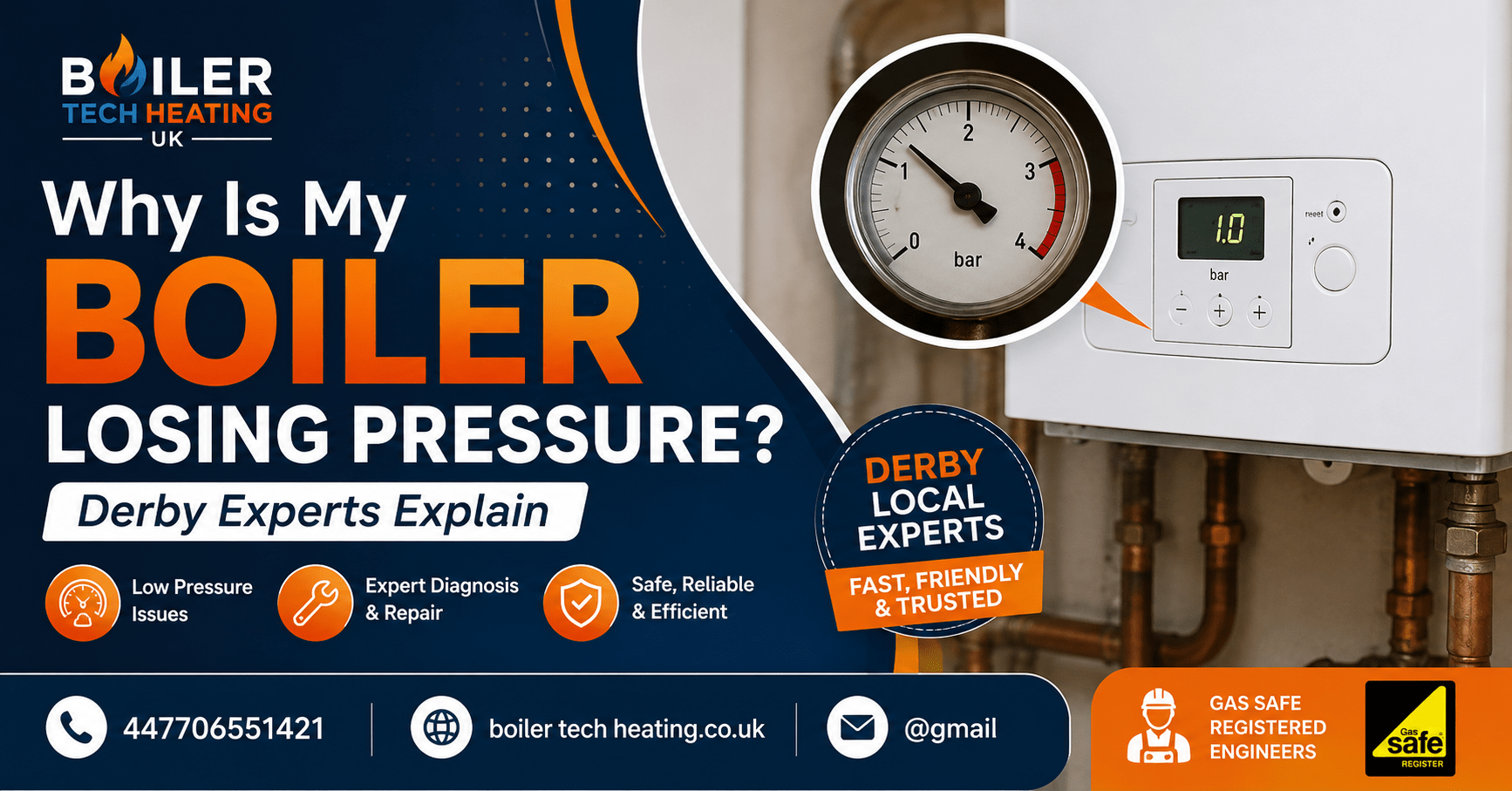
The pressure is usually measured in bar and displayed on a pressure gauge or digital screen on the boiler.
For many domestic heating systems, the pressure when the system is cold is commonly around 1 to 1.5 bar. When the heating is switched on and the water becomes hotter, the pressure can rise.
The exact recommended pressure varies between boiler models and heating systems, so you should always check your manufacturer’s instructions.
If the pressure falls too low, your boiler may stop operating correctly or display a fault code. This is generally a protective measure designed to prevent the appliance from operating with insufficient system pressure.
Why Is My Boiler Losing Pressure?
There isn’t one single cause of boiler pressure loss. Several components can potentially be responsible.
The most common causes include:
- A leak in the central heating system
- A leaking radiator or radiator valve
- A faulty pressure relief valve
- An expansion vessel problem
- Water loss from the boiler
- Air being released from radiators
- A recently drained heating system
- A faulty pressure gauge or sensor
- Hidden pipework leaks
- An underlying boiler or central heating fault
Let’s examine these causes in more detail.
1. There Could Be a Leak in Your Central Heating System
One of the most common reasons for low boiler pressure is water escaping from somewhere within the heating system.
A sealed heating system should retain its water. If water is lost, the pressure can gradually fall.
The leak might be easy to identify. For example, you could notice:
- Water underneath a radiator
- Dampness around a radiator valve
- A dripping pipe connection
- Water underneath the boiler
- Damp patches on walls or floors
- Corrosion around pipe joints
However, not every heating system leak is obvious.
A very small leak can evaporate before it forms a noticeable puddle. Water can also escape underneath flooring or inside walls, making the problem difficult to identify without professional equipment and experience.
What should you do?
If your boiler pressure repeatedly falls, inspect accessible radiators, valves and pipework for visible signs of water.
Don’t remove your boiler’s casing or attempt to investigate internal components yourself.
If you cannot find the source of the water loss, a qualified heating engineer can inspect the system and determine where the problem is coming from.
2. A Leaking Radiator or Valve Could Be Causing Pressure Loss
Your boiler isn’t necessarily the source of the problem.
Radiators and their valves are connected to the sealed central heating system, so a small leak from a radiator valve can eventually cause pressure to fall.
Look carefully around:
- Thermostatic radiator valves
- Lock shield valves
- Bleed valves
- Radiator connections
- Pipe joints
- Older radiators
You may see a small amount of corrosion, staining or moisture around the affected area.
Older heating systems can be particularly susceptible to leaks because components, seals and connections can deteriorate over time.
If you notice a radiator leaking, don’t simply keep topping up your boiler pressure. The leak needs to be repaired.
3. Your Boiler’s Pressure Relief Valve May Be Faulty
The pressure relief valve, often abbreviated to PRV, is an important safety component.
Its job is to release water if the pressure in the heating system becomes too high.
Under normal circumstances, the valve should remain closed. However, if the system becomes over-pressurised, it can discharge water through the external discharge pipe.
A problem can occur if the valve becomes faulty or doesn’t close properly after opening.
This can result in a gradual loss of water and therefore a drop in boiler pressure.
How can you identify this problem?
One possible sign is water dripping from the small external pipe connected to the boiler.
However, don’t assume every external pipe dripping is a PRV problem. A qualified engineer should diagnose the cause.
If the PRV is releasing water, simply depressurising the boiler will not permanently resolve the issue.
4. The Expansion Vessel Could Have a Problem
Another important component to consider is the expansion vessel.
Heating water expands as it becomes hotter. The expansion vessel provides space for this expansion and helps maintain stable pressure within a sealed heating system.
If the expansion vessel loses its charge or develops a fault, you may notice significant pressure fluctuations.
For example, the boiler pressure might appear reasonable when the system is cold but rise substantially when the heating is operating. Once the system cools down, the pressure can then fall again.
In some circumstances, this pressure increase can cause the pressure relief valve to discharge water.
The result may be a cycle of:
Heating on → pressure rises → water discharged → heating cools → pressure falls.
If you repeatedly see large changes in boiler pressure between heating cycles, an expansion vessel should be one of the components a qualified engineer considers.
5. There Could Be a Leak Inside the Boiler
Sometimes the source of pressure loss isn’t visible.
A boiler contains numerous internal components, seals and connections. A fault can allow water to escape internally.
If you notice water underneath your boiler, don’t assume the problem is simply low pressure.
The appliance should be assessed by a suitably qualified professional.
Important safety advice
Do not remove the boiler casing yourself.
Gas boilers contain components that should only be accessed by appropriately qualified engineers. If you suspect a boiler fault, arrange a professional inspection.
6. Have You Recently Bled Your Radiators?
Bleeding radiators can sometimes cause a small reduction in system pressure.
When you bleed a radiator, trapped air is released. Depending on the circumstances, some water may also be lost.
If you have recently bled several radiators and your boiler pressure has dropped slightly, this may explain the change.
Check the pressure against your boiler manufacturer’s recommended range.
If appropriate, you may be able to depressurise the system using the filling loop or filling device specified by the manufacturer.
However, if the pressure continues to fall afterwards, don’t assume that bleeding the radiators was the cause.
There may be another issue within the heating system.
7. The Heating System May Have Been Drained Recently
Boiler pressure can also change after heating system maintenance.
If a radiator has been removed, pipework has been repaired, or part of the heating system has been drained, the system will need to be correctly refilled and pressurised.
A small pressure adjustment after maintenance can therefore be normal.
But if the pressure continues to decrease after the work has been completed, contact the engineer who carried out the work or another qualified heating professional.
8. A Faulty Pressure Gauge or Sensor Could Be Giving an Incorrect Reading
Not every pressure problem means the system has actually lost water.
The pressure gauge or sensor itself can sometimes develop a fault.
If the gauge behaves strangely, doesn’t move as expected, or appears to show inconsistent readings, it may need professional inspection.
Digital boilers can use electronic pressure sensors rather than traditional analogue gauges. A sensor fault can potentially result in inaccurate pressure information or error messages.
An engineer can test the system and determine whether the pressure is genuinely low.
9. You Could Have a Hidden Pipework Leak
Hidden leaks can be particularly difficult for homeowners to identify.
Central heating pipes may run:
- Under floors
- Behind walls
- Inside cupboards
- Beneath extensions
- Through ceiling spaces
- Around concealed heating installations
If water is escaping from hidden pipework, you may not see an obvious puddle near your boiler.
Instead, you might notice:
- Repeated pressure loss
- Damp patches
- Discolouration
- Musty smells
- Damaged flooring
- Peeling paint
- Unexplained increases in moisture
A persistent pressure drop with no visible leak should be professionally investigated.
What Boiler Pressure Should I Have?
There is no single pressure setting that applies to every boiler.
However, many domestic sealed heating systems operate at approximately 1 to 1.5 bar when cold.
When the heating comes on, the pressure can increase because the water expands.
Your boiler manufacturer’s instructions should always take priority over general advice.
If your pressure is consistently below the recommended range, the boiler may not function correctly.
Likewise, unusually high pressure can also indicate a problem.
The important point is to become familiar with the normal pressure range for your particular boiler.
Why Does Boiler Pressure Drop When the Heating Is Off?
Some homeowners notice that boiler pressure is lower after the heating has been switched off for several hours.
A small difference can be normal because the water contracts as it cools.
However, a significant or continuous drop in pressure shouldn’t be ignored.
If the pressure falls from a normal reading to a very low reading every time the system cools down, there could be a leak, expansion vessel problem or pressure relief valve issue.
Keeping a record of the pressure when the system is cold and hot can provide useful information for an engineer.
Why Does My Boiler Pressure Rise When the Heating Is On?
A small increase in pressure while the heating operates is normal.
Heating water expands, which causes the system pressure to rise.
However, a large increase can indicate an issue.
If your pressure climbs significantly whenever the heating is switched on and then falls dramatically when it cools, an expansion vessel problem may be involved.
The pressure relief valve may also discharge water if pressure becomes too high.
This is one reason why looking at pressure behaviour over time is more useful than checking the gauge only once.
Is Low Boiler Pressure Dangerous?
Low boiler pressure isn’t usually dangerous by itself.
Modern boilers have safety controls and may shut down when pressure falls below an acceptable level.
However, the reason for the low pressure may require attention.
For example, a persistent drop could be caused by a water leak or a faulty boiler component.
If you smell gas, suspect a gas leak, see a serious water leak, or have any immediate safety concerns, follow the appropriate emergency procedures and contact a qualified professional.
Never attempt to repair gas boiler components yourself.
Can I Depressurise My Boiler Myself?
Many modern boilers allow homeowners to restore system pressure using a filling loop or filling device.
The process varies depending on the boiler and heating system.
If your manufacturer’s instructions explain how to depressurise the system, follow those instructions carefully.
The important point is not to over-pressurise the boiler.
You should also avoid repeatedly depressurising the system without investigating why the pressure keeps falling.
If you need to add pressure regularly, the filling loop isn’t the real solution—the underlying fault needs to be identified.
Why Does My Boiler Keep Losing Pressure After Repress rising?
This is one of the most important warning signs.
If you depressurise your boiler and the pressure drops again soon afterwards, there is likely to be an underlying issue.
Possible causes include:
- A central heating leak
- A leaking radiator
- A faulty pressure relief valve
- An expansion vessel fault
- An internal boiler leak
- Hidden pipework damage
- A faulty pressure sensor
If the problem keeps returning, professional boiler diagnostics are recommended.
Continuously adding water can also introduce fresh oxygen into the heating system, which isn’t something you should do unnecessarily.
How Can Derby Homeowners Spot a Boiler Pressure Problem Early?
Regularly checking your boiler can help you identify changes before they become major problems.
You don’t need to become a heating engineer. Simply pay attention to your boiler’s normal behaviour.
For example, make a note of:
- The normal cold pressure
- How much the pressure rises when heating is on
- Whether the boiler displays fault codes
- How frequently you need to depressurise
- Whether radiators require repeated bleeding
- Any visible leaks
- Unusual noises
- Water around the boiler
If you notice a pattern, tell your heating engineer.
This information can make diagnosis easier.
Why Regular Boiler Servicing Matters
Regular boiler servicing isn’t only about keeping the appliance running efficiently.
A professional service can help identify signs of:
- Component wear
- Leaks
- Corrosion
- Pressure problems
- Ventilation issues
- Unsafe operation
- Other developing faults
Gas appliances should be serviced by an appropriately qualified professional.
If your boiler is losing pressure repeatedly, don’t wait until the appliance stops working completely before arranging an inspection.
Early diagnosis can sometimes prevent a relatively straightforward fault from developing into a more expensive repair.
Boiler Pressure Problems in Older Derby Homes
Derby has a wide variety of properties, from newer developments to older homes with established heating systems.
Older central heating systems can have ageing radiators, valves and pipework. Over time, seals and connections may deteriorate.
This doesn’t mean an older system will automatically lose pressure, but age can be a factor when diagnosing recurring faults.
If you live in an older property and your boiler pressure is continually falling, an engineer may need to assess not just the boiler but the entire central heating system.
Should I Replace My Boiler If It Keeps Losing Pressure?
Not necessarily.
A boiler losing pressure doesn’t automatically mean the boiler needs replacing.
For example, the cause could be a relatively straightforward radiator leak or valve problem.
In other situations, the issue could involve a component inside the boiler or a wider central heating problem.
A professional diagnosis should come before making a decision about boiler replacement.
If the boiler is old, inefficient and experiencing several unrelated faults, replacement may eventually make financial sense. But pressure loss alone isn’t enough to conclude that you need a new boiler.
How Much Does It Cost to Fix a Boiler Losing Pressure in Derby?
There isn’t one fixed price for repairing boiler pressure problems.
The cost depends on the cause.
A minor leak or valve issue may require a relatively straightforward repair, whereas replacing a major component or repairing hidden pipework can be more involved.
An honest heating company should diagnose the problem before recommending a repair.
When comparing Derby boiler repair services, consider more than just the cheapest quote. Check that the engineer is appropriately qualified, insured where applicable and experienced with your boiler type.
For gas boiler work, always check the engineer’s Gas Safe registration.
What Should You Do If Your Boiler Pressure Keeps Dropping?
If the pressure is low, start by checking your boiler manual and the manufacturer’s recommended pressure range.
If your boiler is designed for homeowner depressurisation, you can follow the manufacturer’s instructions to restore the pressure.
Afterwards, monitor the gauge.
If it remains stable, the pressure drop may have been related to a recent event such as radiator bleeding.
If the pressure falls again, arrange professional inspection.
Don’t ignore recurring pressure loss.
A boiler that needs frequent depressurising is telling you that something isn’t right.
Finding the cause early can help protect your heating system and prevent an inconvenient breakdown.
Conclusion:
So, why is your boiler losing pressure? There are several possible answers, and the cause isn’t always the boiler itself.
A recently bled radiator may explain a small temporary pressure drop, but repeated low pressure can indicate a leak, faulty pressure relief valve, expansion vessel problem, hidden pipework leak or another heating system fault.
For Derby homeowners, the key is to pay attention to how frequently the pressure falls and whether the pressure changes significantly between heating cycles.
If you only need to depressurise the system occasionally and the pressure then remains stable, there may not be an immediate cause for concern. But if you’re constantly reaching for the filling loop, that’s a sign that the underlying issue needs investigation.
Don’t treat repeated depressurising as a permanent fix.
A qualified Derby heating engineer can inspect the system, diagnose the cause and recommend the appropriate solution. And when it comes to gas boiler work, always use a Gas Safe registered engineer.
With regular servicing, sensible maintenance and prompt attention to leaks or unusual pressure changes, you can help keep your boiler and central heating system working reliably throughout the year.
Frequently Asked Questions About Boiler Pressure
1. Why is my boiler losing pressure every few days?
If your boiler pressure falls every few days, there is likely to be an underlying fault. Common causes include a water leak, faulty pressure relief valve, expansion vessel problem or internal boiler leak. A qualified heating engineer should investigate recurring pressure loss rather than simply depressurising the system repeatedly.
2. How often should a boiler need depressurising?
A sealed central heating system shouldn’t normally require frequent depressurising. If you are regularly topping up the pressure, this could indicate that water is escaping or that a component isn’t operating correctly.
3. What pressure should my boiler be at?
Many domestic boilers operate at approximately 1 to 1.5 bar when the system is cold, but the correct pressure depends on the appliance and heating system. Always follow the manufacturer’s instructions for your specific boiler.
4. Can a leaking radiator cause low boiler pressure?
Yes. Radiators, valves and their connections form part of the sealed heating system. If water escapes through a leak, system pressure can fall. Look for dampness, corrosion or water around radiator connections.
5. Why does my boiler pressure rise when the heating is switched on?
A small rise is normal because heating water expands. If the pressure rises excessively, however, there may be an issue with the expansion vessel or another component. An engineer should investigate significant pressure fluctuations.
6. Is it normal for boiler pressure to drop overnight?
A small change can occur as heating water cools, but a significant or repeated overnight pressure drop may indicate water loss or another fault. Monitor the pressure and arrange professional advice if the problem continues.
7. Can I fix low boiler pressure myself?
You may be able to depressurise some boilers using the manufacturer’s approved filling procedure. However, you should not attempt to repair internal boiler components yourself. If the pressure continues to fall, contact a qualified heating engineer.
8. Why is water coming from the pipe outside my boiler?
Water coming from the external discharge pipe may indicate that the pressure relief valve has released water. This can happen when system pressure becomes too high or when the valve develops a fault. Professional diagnosis is recommended if the pipe continues to discharge water.
9. Does low boiler pressure mean I need a new boiler?
No. Low pressure can result from a number of repairable problems, including leaks, valves and expansion vessel faults. An engineer should identify the cause before you decide whether boiler replacement is necessary.
10. Who can repair a boiler losing pressure in Derby?
If you have a gas boiler, use an appropriately qualified Gas Safe registered engineer for gas-related work. A professional can inspect the boiler and central heating system, identify the reason for pressure loss and recommend the appropriate repair.
Primary Keyword
- Why is my boiler losing pressure
Secondary Keywords
- boiler losing pressure
- boiler pressure keeps dropping
- low boiler pressure
- boiler pressure dropping
- why does my boiler lose pressure
- boiler keeps losing pressure
- low pressure boiler
- boiler pressure problems
- boiler pressure repair
- boiler pressure keeps dropping when heating is on
- boiler pressure drops overnight
- boiler losing pressure but no leak
- boiler pressure relief valve
- boiler expansion vessel
- central heating losing pressure
