Trusted Professional Boiler Installation & Replacement Services for Homes and Businesses
1. Introduction to Modern Boiler Installation Role of Boilers in Today’s Heating Systems
Modern heating systems rely heavily on boilers because they provide consistent warmth a professional boiler installation services for homes and businesses, it nd hot water supply across residential and commercial properties. When discussingis important to understand that boilers are not just appliances—they are central heating engines that determine comfort, efficiency, and energy consumption in any building.
Trusted Professional Boiler Installation & Replacement Services for Homes and Businesses
In today’s world, heating demand is not just about staying warm; it is about doing so efficiently and sustainably. Rising energy prices and environmental concerns have made property owners more conscious of how their heating systems operate. A properly installed boiler ensures that energy is used wisely, heat is distributed evenly, and operational costs remain under control.
Boilers are also adaptable. Whether installed in a small apartment or a large office complex, they can be configured to meet different heating loads. This flexibility makes them one of the most widely used heating solutions in the world. However, this adaptability only works effectively when installation is done correctly by trained professionals who understand system design, pressure control, and energy optimization.
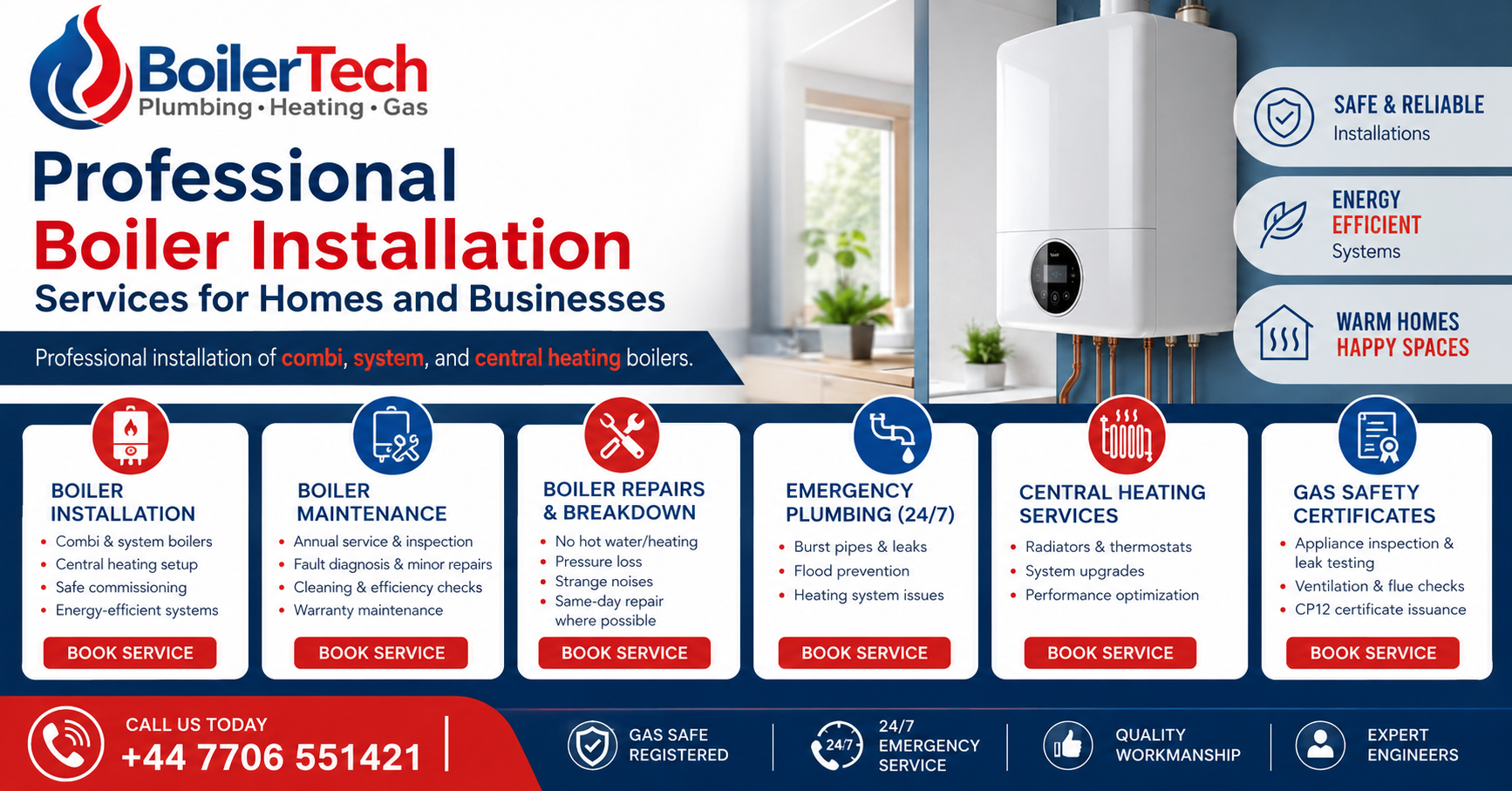
Trusted Professional Boiler Installation & Replacement Services for Homes and Businesses
Boiler installation is a structured engineering process
What the Installation Process Includes
that goes far beyond simply mounting a unit on a wall. It involves system design, safety preparation, pipework planning, electrical or gas connection, and final commissioning. Professional installation services ensure that every step is completed in a controlled and compliant manner.
The process typically begins with a property assessment. Engineers evaluate heating requirements, insulation levels, water usage patterns, and existing system conditions. Based on this analysis, the correct boiler type and capacity are selected. This step is crucial because an incorrectly sized boiler can lead to inefficiency, higher bills, or system strain.
Once planning is complete, installation begins with physical setup. This includes positioning the boiler, connecting it to the water supply, integrating it with radiators or underfloor heating, and ensuring proper ventilation. Each connection must be tested to prevent leaks or pressure issues.
Finally, the system undergoes commissioning, where performance is tested under real conditions. This ensures the boiler runs safely and efficiently before being handed over for regular use.
3. Why Professional Boiler Installation Is Essential
Safety, Compliance, and Long-Term Value
Boiler systems involve gas lines, high water pressure, and electrical components, making safety the most important reason to choose professional installation. A small mistake can lead to gas leaks, carbon monoxide exposure, or system failure. These risks are not theoretical—they are real-world hazards that occur when installations are done incorrectly.
Professional installers follow strict regulatory standards and manufacturer guidelines. They ensure that every safety valve, pipe connection, and ventilation outlet is correctly installed. This reduces the risk of malfunction and ensures compliance with legal safety requirements.
Beyond safety, professional installation adds long-term value. A properly installed boiler operates more efficiently, lasts longer, and requires fewer repairs. Over time, this translates into lower maintenance costs and better energy performance, making it a financially smart investment.
4. How Boilers Work in Residential and Commercial Spaces
Basic Heating Cycle Explained
Boilers operate on a relatively simple but highly effective principle: heating water and distributing it throughout a building. Cold water enters the system, is heated using gas, electricity, or oil, and then circulated through radiators or underfloor heating systems.
Trusted Professional Boiler Installation & Replacement Services for Homes and Businesses
n residential properties, this process provides heating and hot water for daily activities such as bathing, cooking, and cleaning. In commercial buildings, boilers must handle larger loads and maintain consistent heating for long operational hours.
The efficiency of this cycle depends heavily on installation quality. Poor setup can lead to uneven heating, energy waste, and system strain. Professional installation ensures that water flow, pressure levels, and heat distribution are properly balanced.
Professional Boiler Installation Services for Homes and Businesses
5. Types of Boilers Available in the Market
Combi Boilers
Combi boilers provide both heating and hot water directly from a single unit without the need for storage tanks. They are ideal for smaller homes where space is limited and water demand is moderate.
System Boilers
System boilers use a separate hot water cylinder, making them suitable for medium to large homes with higher water usage. They provide better performance when multiple taps or showers are used simultaneously.
Conventional Boilers
Conventional boilers are designed for larger properties or older heating systems. They require both a hot water cylinder and a cold water storage tank, making them suitable for high-demand environments.
6. Choosing the Right Boiler for Your Property
Size, Demand, and Efficiency Factors
Selecting the correct boiler depends on several factors including property size, number of occupants, and daily water usage. A small boiler in a large property will struggle to meet demand, while an oversized boiler will waste energy.
Professionals assess insulation levels, radiator capacity, and usage patterns before recommending a system. This ensures optimal performance and energy efficiency tailored to the property’s specific needs.
7. Residential Boiler Installation Process
Home Evaluation and Planning
Residential installation begins with a detailed home assessment. Engineers inspect existing heating systems, pipework, and insulation conditions to design a suitable installation plan.
Installation and Setup Workflow
The installation process includes mounting the boiler, connecting pipework, installing controls, and testing the system for leaks and performance stability.
8. Commercial Boiler Installation Process
Industrial Heating Requirements
Commercial properties require high-capacity systems capable of running continuously under heavy demand.
Large-Scale System Design
These systems involve complex engineering, including multiple boilers, zoned heating, and advanced control systems.
9. Boiler Safety Standards and Regulations
Gas Safety and Compliance Rules
Strict regulations ensure boilers are installed safely, with correct ventilation, pressure control, and certified components.
10. Energy Efficiency and Cost Savings
Reducing Monthly Energy Bills
Efficient installation reduces fuel consumption and lowers monthly energy costs significantly over time.
11. Boiler Placement and System Design
Ventilation and Space Planning
Proper placement ensures safe airflow, accessibility, and efficient operation.
12. Pipework and Heating Network Integration
Radiators and Water Flow Balance
Balanced pipework ensures even heating across all rooms.
13. Smart Controls and Modern Heating Technology
Thermostats and Automation Systems
Smart systems allow remote control and energy optimization.
14. Installation Time and Project Planning
Factors That Affect Duration
Time depends on system complexity, property size, and installation type.
15. Cost of Boiler Installation Services
Pricing Breakdown Factors
Costs vary based on boiler type, labor, and system upgrades.
16. Maintenance After Installation
Service Frequency and Care
Regular maintenance ensures long-term reliability and efficiency.
17. Common Boiler Installation Mistakes
How Experts Prevent Failures
Professional installation avoids leaks, pressure issues, and inefficiency.
18. Environmental Impact of Modern Boilers
Emission Reduction Technologies
Modern boilers reduce carbon emissions through improved combustion efficiency.
19. Signs You Need a New Boiler
Performance Warning Signals
Frequent breakdowns, rising bills, and uneven heating indicate replacement needs.
20. Conclusion and Final Insights
A properly installed boiler is essential for safety, comfort, and long-term energy efficiency in both homes and businesses. Professional installation ensures that every technical detail is handled correctly, from system design to final commissioning. Choosing expert services is not just about installation—it is about securing reliable performance for years.
Additional Content: Professional Boiler Installation Services for Homes and Businesses
21. Benefits of Upgrading to a New Boiler System
Improved Performance and Reliability
Many homeowners and business owners continue using outdated boiler systems long after their peak performance years have passed. While an old boiler may still function, it often operates inefficiently, consumes more fuel, and requires frequent repairs. Upgrading to a modern boiler can dramatically improve heating performance while reducing operating costs.
New boilers are designed with advanced technology that allows them to extract more heat from the same amount of fuel. This means less energy waste and lower utility bills. In addition, modern systems provide faster heating response times, ensuring rooms warm up quickly and maintain consistent temperatures.
Reliability is another major advantage. Older systems are prone to unexpected breakdowns, especially during winter when heating demand is highest. A new professionally installed boiler minimizes the risk of interruptions and provides peace of mind. Businesses, in particular, benefit from this reliability because heating disruptions can affect employee productivity and customer comfort.
Many modern boilers also come with extended warranties when installed by certified professionals. This additional protection can save significant money on repairs and maintenance over the system’s lifespan.
22. The Importance of Correct Boiler Sizing
Avoiding Efficiency and Performance Problems
One of the most common mistakes in heating system design is selecting the wrong boiler size. Many people assume that a larger boiler automatically provides better performance, but this is not always true. A boiler that is too large may cycle on and off frequently, wasting energy and increasing wear on components.
On the other hand, a boiler that is too small may struggle to meet heating demands, resulting in cold rooms and insufficient hot water supply. Professional boiler installers conduct detailed heat-loss calculations to determine the correct size for each property.
23. Boiler Installation for Different Business Types
Custom Solutions for Commercial Properties
Commercial properties have vastly different heating requirements depending on their industry and operational needs. A small retail shop, for example, requires a different heating solution than a large warehouse, hotel, school, or healthcare facility.
Hotels often require large volumes of hot water throughout the day. Office buildings need consistent heating during working hours. Restaurants require reliable hot water for cleaning and food preparation. Manufacturing facilities may need specialized heating systems integrated into production processes.
Professional boiler installation companies evaluate these unique requirements before recommending a solution. They consider occupancy levels, operational schedules, energy consumption goals, and future expansion plans.
A customized approach ensures that the installed boiler system can meet current needs while remaining adaptable for future growth. This strategic planning helps businesses avoid costly upgrades and operational disruptions later.
24. Smart Heating Controls and Energy Management
Modern Technology for Greater Efficiency
Technology has transformed the way heating systems operate. Today’s boiler installations often include smart controls that provide unprecedented levels of convenience and energy management.
Smart thermostats allow users to control heating remotely using smartphones or tablets. Property owners can adjust temperatures, create schedules, and monitor energy usage from virtually anywhere. This level of control helps reduce unnecessary energy consumption.
Some advanced systems use artificial intelligence and machine learning to analyze heating patterns and automatically optimize performance. For example, the system may learn when occupants typically arrive home and adjust temperatures accordingly.
Businesses benefit significantly from these technologies because heating can be managed across multiple zones and departments. Different areas can operate at different temperatures depending on occupancy and usage requirements.
25. Boiler Maintenance and Long-Term Performance
Protecting Your Investment
A professionally installed boiler represents a significant investment, making regular maintenance essential for protecting that investment. Even the highest-quality boiler requires periodic inspections and servicing to maintain efficiency and safety.
Routine maintenance typically includes:
- Checking gas pressure
- Inspecting heat exchangers
- Cleaning internal components
- Testing safety controls
- Verifying ventilation systems
- Checking water pressure levels
Regular servicing can identify minor issues before they become major repairs. It also helps maintain manufacturer warranties, which often require annual inspections.
Businesses especially benefit from preventative maintenance programs because unexpected downtime can disrupt operations and increase expenses. Scheduled servicing ensures continuous performance and reduces emergency repair costs.
A well-maintained boiler can often operate efficiently for 15 to 20 years or longer, making maintenance one of the most cost-effective ways to maximize return on investment.
The heating industry continues to evolve as governments, manufacturers, and consumers prioritize energy efficiency and environmental r
esponsibility. Future boiler installations will likely include even more advanced technologies
25. Boiler Maintenance and Long-Term Performance
Protecting Your Investment
A professionally installed boiler represents a significant investment, making regular maintenance essential for protecting that investment. Even the highest-quality boiler requires periodic inspections and servicing to maintain efficiency and safety.
Routine maintenance typically includes:
- Checking gas pressure
- Inspecting heat exchangers
- Cleaning internal components
- Testing safety controls
- Verifying ventilation systems
- Checking water pressure levels
Regular servicing can identify minor issues before they become major repairs. It also helps maintain manufacturer warranties, which often require annual inspections.
Businesses especially benefit from preventative maintenance programs because unexpected downtime can disrupt operations and increase expenses. Scheduled servicing ensures continuous performance and reduces emergency repair costs.
A well-maintained boiler can often operate efficiently for 15 to 20 years or longer, making maintenance one of the most cost-effective ways to maximize return on investment.
26. Future Trends in Boiler Installation Services
The Evolution of Heating Technology
The heating industry continues to evolve as governments, manufacturers, and consumers prioritize energy efficiency and environmental responsibility. Future boiler installations will likely include even more advanced technologies designed to reduce emissions and improve sustainability.
Condensing boilers have already become the industry standard in many markets due to their superior efficiency. Future systems may integrate more closely with renewable energy sources such as solar thermal systems and heat pumps.
Hydrogen-ready boilers are another exciting development. These systems are designed to operate on natural gas today while remaining compatible with hydrogen fuel in the future. As hydrogen infrastructure expands, these boilers could play a major role in reducing carbon emissions.
Digital monitoring systems are also becoming increasingly sophisticated. Real-time diagnostics, predictive maintenance alerts, and automated performance optimization are expected to become standard features in modern heating systems.
For homeowners and businesses investing in new boiler installations today, choosing future-ready technology can provide long-term benefits and greater flexibility as energy markets continue to change.
Frequently Asked Questions (FAQs)
1. How long does a professional boiler installation take?
Most residential installations take between one and three days, while large commercial projects may require several days or weeks depending on complexity.
2. What type of boiler is best for a small home?
Combi boilers are often the best choice for small homes because they provide heating and hot water without requiring additional storage tanks.
3. How often should a boiler be serviced?
Most manufacturers recommend annual servicing to maintain efficiency, safety, and warranty compliance.
4. Can a new boiler reduce energy bills?
Yes. Modern high-efficiency boilers can significantly reduce fuel consumption and lower monthly heating costs.
5. How long does a boiler typically last?
A professionally installed and properly maintained boiler can last between 15 and 20 years, depending on usage and maintenance practices.
