
Emergency Boiler Repair Near Me What to Do First
A boiler breakdown never happens at a convenient time. Whether it occurs on a freezing winter morning, late at night, or during a holiday weekend, losing your heating or hot water can quickly become stressful. Searching for “emergency boiler repair near me“ is often the first thing homeowners do, but taking the right steps before calling a technician can save time, reduce damage, and even lower repair costs.
Modern boilers are designed with numerous safety features, yet mechanical failures, aging components, poor maintenance, and unexpected leaks can still occur. According to the Energy Saving Trust, regular boiler servicing significantly reduces the risk of unexpected breakdowns while improving energy efficiency.
This guide explains exactly what to do first when your boiler fails, how to identify genuine emergencies, when to contact a qualified heating engineer, and how to prevent similar issues from happening again.
Understanding a Boiler Emergency
Not every boiler issue is considered an emergency. Some problems can wait until normal business hours, while others require immediate professional attention due to safety risks or potential property damage.
A boiler emergency typically involves situations where your home’s heating system becomes unsafe or completely unusable. This may include gas smells, water leaks, electrical faults, or complete heating failure during extremely cold weather.
Understanding the difference between a minor issue and an emergency helps you respond appropriately. Acting too slowly can worsen damage, while panicking over a small fault may result in unnecessary emergency call-out charges.
Emergency Boiler Repair Near Me What to Do First
Common Signs Your Boiler Needs Immediate Attention
Several warning signs indicate that your boiler should be inspected as soon as possible.
These include:
- No heating and no hot water
- Water leaking from the boiler
- Burning smells
- Gas odor
- Loud banging or vibrating noises
- Error codes that won’t reset
- Boiler repeatedly switching off
- Visible corrosion or damaged pipes
One of the most serious signs is the smell of gas. If you suspect a gas leak, turn off the gas supply if safe to do so, open windows, leave the property immediately, and contact your local gas emergency service. Never ignore this warning.
Situations That Require Emergency Repair
Some boiler problems become emergencies because they pose immediate risks to health, safety, or property.
Examples include:
- Carbon monoxide alarm activation
- Significant water leaks
- Electrical burning smells
- Boiler overheating
- Burst heating pipes
- Complete heating failure during freezing temperatures
- Gas leaks
The Gas Safe Register advises that only Gas Safe registered engineers should repair gas boilers. Attempting DIY repairs on gas appliances is both dangerous and illegal in many regions.
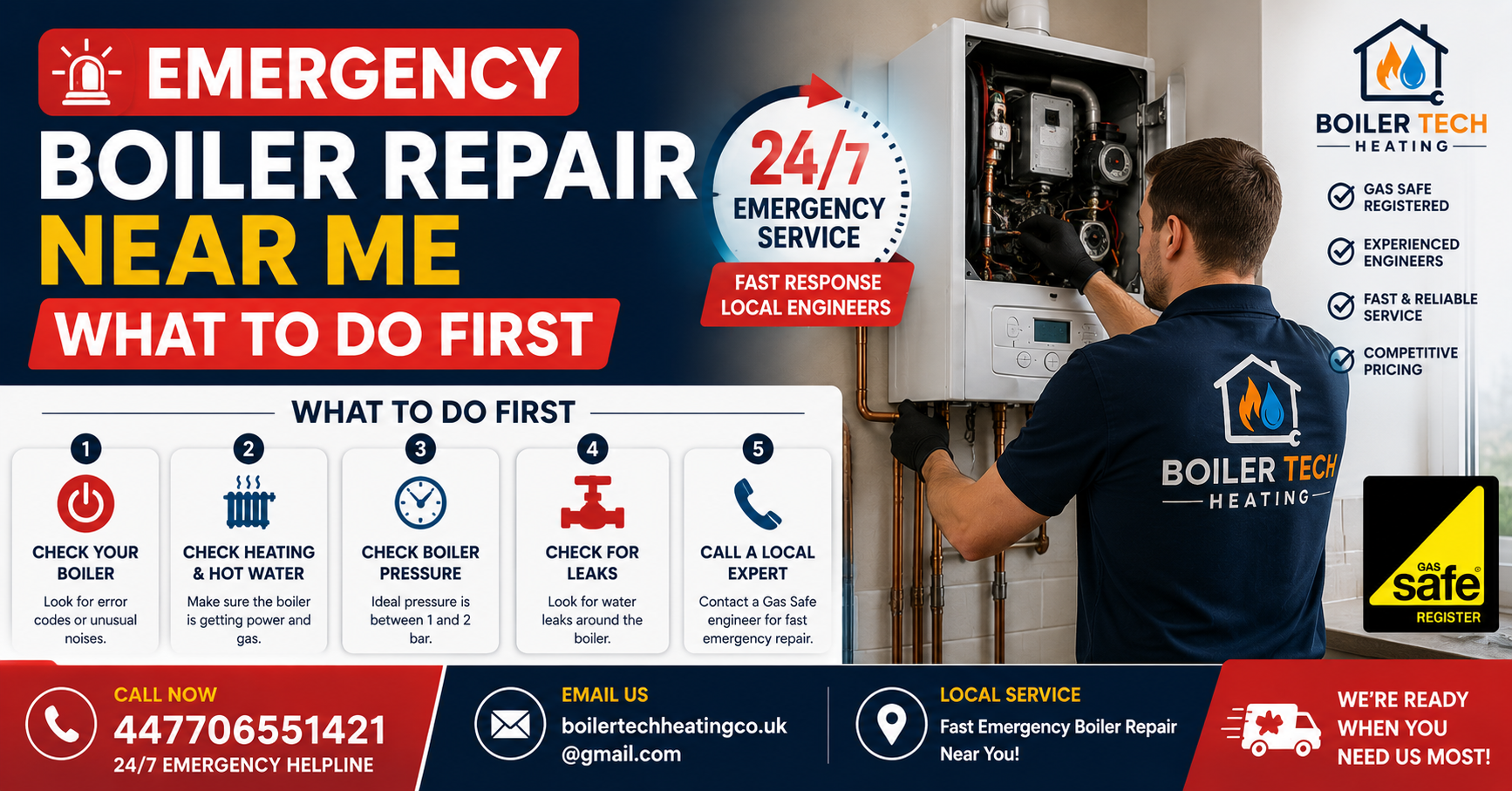
What to Do First When Your Boiler Stops Working
Your first reaction should always be to remain calm. Many boiler faults are caused by relatively simple issues that can be identified without taking the appliance apart.
Start by checking whether the problem affects only your home or if there’s a wider gas or power outage in your neighborhood.
Turn Off the Boiler Safely
If you notice leaks, unusual noises, or burning smells, switch off the boiler using its power switch.
Avoid dismantling the casing or attempting repairs yourself. Modern boilers contain electrical components, pressurized water systems, and gas connections that require specialist knowledge.
If you suspect carbon monoxide exposure, leave the property immediately and seek emergency assistance.
Check Basic Issues Before Calling an Engineer
Before paying for emergency repairs, inspect a few common causes of boiler failure.
Check:
- Thermostat settings
- Electrical power supply
- Fuse box
- Boiler pressure gauge
- Programmer or timer
- Gas supply (if other gas appliances also fail)
Low pressure is one of the most common reasons boilers stop operating. Many systems function best between 1.0 and 1.5 bar when cold. If the pressure is too low, your owner’s manual may explain how to repressurize the system safely.
If you’re uncertain, avoid guessing and contact a qualified engineer.
When to Call an Emergency Boiler Repair Service
Some faults require professional attention immediately.
If basic troubleshooting doesn’t restore operation, or if safety concerns exist, contact an emergency repair company.
Look for companies offering:
- 24/7 emergency service
- Gas Safe registered engineers
- Transparent pricing
- Positive online reviews
- Fully insured technicians
- Warranty on repairs
A reputable company will often provide an estimated arrival time and explain emergency call-out charges before dispatching an engineer.
Choosing a Reliable Local Boiler Repair Company
Searching for “emergency boiler repair near me” will likely produce dozens of results.
Compare providers based on:
| Factor | Why It Matters |
|---|---|
| Gas Safe Registration | Legal requirement for gas boiler repairs |
| Customer Reviews | Indicates reliability |
| Response Time | Faster assistance during emergencies |
| Transparent Pricing | Avoid hidden fees |
| Warranty | Protects your investment |
| Experience | Better diagnosis and repairs |
Don’t simply choose the cheapest option. A qualified engineer may save money by diagnosing the fault correctly the first time.
Questions to Ask Before Booking a Technician
Before confirming an appointment, ask:
- Are you Gas Safe registered?
- What is your emergency call-out fee?
- Is labor included?
- Do you carry common replacement parts?
- Do you guarantee your repairs?
- How soon can someone arrive?
Clear communication helps avoid unexpected costs.
Common Emergency Boiler Problems
Understanding common faults helps homeowners describe symptoms accurately when calling a repair service.
No Heating or Hot Water
This is among the most common emergency complaints.
Possible causes include:
- Faulty diverter valve
- Broken pump
- Thermostat failure
- Airlocks
- Low pressure
- Frozen condensate pipe
- PCB (circuit board) failure
The repair depends entirely on proper diagnosis.
Boiler Leaks
Water leaks should never be ignored.
Leaks may originate from:
- Pressure relief valves
- Pump seals
- Corroded pipework
- Internal heat exchanger damage
- Loose fittings
Even small leaks can damage flooring, walls, and electrical components over time.
Strange Noises
Boilers sometimes produce unusual sounds including:
- Banging
- Whistling
- Gurgling
- Clicking
- Vibrating
These noises often result from trapped air, limescale buildup, failing pumps, or circulation problems.
Early repairs prevent more expensive component failures.
Low Boiler Pressure
Low pressure commonly causes boilers to lock out automatically.
Pressure loss may indicate:
- Minor leaks
- Recently bled radiators
- Faulty pressure relief valves
- Expansion vessel issues
Repeated pressure drops should always be investigated.
Frozen Condensate Pipe
During severe winter weather, condensate pipes can freeze.
Symptoms include:
- Gurgling sounds
- Boiler error codes
- Sudden shutdown
Carefully thawing the pipe with warm (not boiling) water often resolves the issue, but repeated freezing may require insulation or rerouting.
Emergency Boiler Repair Costs
Emergency boiler repairs vary significantly depending on the fault.
Typical factors influencing costs include:
| Factor | Impact on Cost |
|---|---|
| Time of Call | Nights and weekends cost more |
| Replacement Parts | Premium brands increase cost |
| Boiler Age | Older systems may require rare parts |
| Complexity | Major faults require longer repairs |
| Location | Travel distance affects pricing |
Minor repairs may cost considerably less than replacing major components like heat exchangers or circuit boards.
Obtaining an itemized quote helps you understand exactly what you’re paying for.
Is Emergency Boiler Cover Worth It?
Boiler cover plans can reduce financial stress when unexpected breakdowns occur.
Many policies include:
- Emergency call-outs
- Annual servicing
- Parts and labor
- 24-hour helpline
- Priority appointments
Whether boiler cover is worthwhile depends on your boiler’s age, reliability, and repair history. Older boilers often benefit most from comprehensive coverage.
How to Prevent Future Boiler Emergencies
Preventative maintenance remains the most effective way to avoid emergency breakdowns.
Schedule an annual service by a Gas Safe registered engineer. Routine inspections identify worn components before they fail completely.
Simple maintenance habits also make a difference:
- Bleed radiators when needed.
- Monitor boiler pressure regularly.
- Keep external condensate pipes insulated in winter.
- Listen for unusual noises.
- Address small leaks immediately.
- Replace aging boilers before major failures become frequent.
The Energy Saving Trust notes that efficient, well-maintained boilers consume less energy, helping reduce heating bills while improving system reliability.
As heating engineer Richard Trethewey has often emphasized regarding home heating systems: “Preventive maintenance is almost always less expensive than emergency repairs.” That principle holds true for boilers, where small annual investments can help avoid major unexpected costs.
Conclusion
An unexpected boiler breakdown can be frustrating, but knowing what to do first makes the situation far more manageable. Begin by checking for simple issues such as power supply, thermostat settings, and boiler pressure while staying alert for signs of genuine emergencies like gas leaks, electrical burning smells, or significant water leaks. Safety should always come first, and any suspected gas-related fault should be handled by leaving the property if necessary and contacting the appropriate emergency service.
When professional help is needed, choose a Gas Safe registered engineer with transparent pricing, strong customer reviews, and emergency availability. Regular servicing, prompt attention to minor issues, and routine maintenance remain the best strategies for preventing costly breakdowns and ensuring your heating system continues to operate safely and efficiently throughout the year.
Frequently Asked Questions (FAQs)
1. What qualifies as a boiler emergency?
Gas leaks, carbon monoxide alarms, major water leaks, electrical burning smells, and complete heating failure during freezing weather generally require immediate professional attention.
2. Can I repair my boiler myself?
No. Gas boiler repairs should only be carried out by qualified Gas Safe registered engineers due to safety and legal requirements.
3. Why does my boiler keep losing pressure?
Common causes include small leaks, faulty pressure relief valves, expansion vessel problems, or recently bled radiators. Persistent pressure loss should be professionally inspected.
4. How quickly can an emergency boiler engineer arrive?
Response times vary by company and demand. Many emergency services aim to attend within a few hours, though severe weather may extend waiting times.
5. How often should a boiler be serviced?
Most manufacturers and industry bodies recommend servicing your boiler once every 12 months to maintain safety, efficiency, and warranty compliance.
Continued in next response…
Additional FAQs
6. How do I know if my boiler needs repairing or replacing?
If your boiler is over 10–15 years old, breaks down frequently, has rising repair costs, or struggles to heat your home efficiently, replacement may be more cost-effective. A qualified heating engineer can assess its condition and recommend the best option.
7. Is it safe to use my boiler if it’s making loud banging noises?
No. Loud banging, knocking, or rumbling noises can indicate issues such as limescale buildup, trapped air, or overheating. Turn the boiler off and arrange an inspection by a Gas Safe registered engineer.
8. What should I do if my boiler is leaking water?
Switch off the boiler if it is safe to do so and place a container or towels under the leak to minimize water damage. Do not attempt to dismantle the boiler. Contact an emergency boiler repair service as soon as possible.
9. Why has my boiler suddenly stopped producing hot water?
Common causes include low boiler pressure, a faulty thermostat, a broken diverter valve, ignition failure, or a malfunctioning pump. A professional diagnosis is often required to identify the exact issue.
10. Can a power outage affect my boiler?
Yes. Many modern boilers rely on electricity for ignition, controls, and circulation pumps. After power is restored, you may need to reset the boiler following the manufacturer’s instructions.
11. What is the average response time for emergency boiler repair?
Many 24/7 boiler repair companies aim to arrive within 2–6 hours, although response times can vary depending on your location, weather conditions, and technician availability.
12. Should I turn off my water supply if my boiler is leaking?
If the leak is severe and you know how to safely isolate the water supply, turning it off can help prevent additional water damage. If you’re unsure, wait for a qualified engineer rather than risking further complications.
13. Does homeowners insurance cover emergency boiler repairs?
Coverage varies by insurer and policy. Some homeowners insurance policies cover damage caused by sudden boiler failures, while dedicated boiler breakdown cover typically includes repair costs. Check your policy documents for details.
14. What information should I provide when calling an emergency boiler engineer?
Be prepared to provide:
- Your boiler’s make and model
- Any error codes displayed
- A description of the problem
- When the issue started
- Whether you have heating, hot water, or both
- Any unusual smells, noises, or leaks
Providing accurate information helps the engineer arrive better prepared.
15. How can I prevent my boiler from breaking down in winter?
Schedule an annual boiler service before the cold season, keep the boiler pressure within the recommended range, insulate exposed condensate pipes, bleed radiators when necessary, and address minor faults promptly instead of waiting for them to worsen.
16. Is a boiler repair covered under the manufacturer’s warranty?
If your boiler is still within its warranty period and has been serviced according to the manufacturer’s requirements, certain repairs may be covered. Always check the warranty terms before paying for repairs.
17. Can low boiler pressure cause the heating to stop working?
Yes. Most modern boilers have safety mechanisms that shut the system down when pressure falls below the recommended level, usually around 1.0 bar. Restoring the correct pressure may resolve the issue if there are no underlying faults.
18. What certifications should an emergency boiler engineer have?
For gas boilers, the engineer should be Gas Safe registered (UK) or hold the appropriate licensing and certification required in your country. Always ask to see their credentials before any work begins.
19. Can cold weather damage my boiler?
Yes. Freezing temperatures can cause condensate pipes to freeze, reduce system efficiency, and increase the risk of burst pipes. Proper insulation and regular maintenance help protect your heating system during winter.
20. How long does an emergency boiler repair usually take?
Simple issues such as repressurizing the system or replacing a small component may take 30–90 minutes, while more complex repairs involving pumps, heat exchangers, or circuit boards can take several hours or require a follow-up visit if parts need to be ordered.
