
Why Is My Boiler Losing Pressure? Causes & Solutions
A boiler that keeps losing pressure is one of the most common central heating problems homeowners face. You glance at the pressure gauge and notice it has dropped below the recommended level again. You top it up, everything works for a while, and then the pressure falls once more. Sound familiar? While it might seem like a minor inconvenience, recurring pressure loss is usually a sign that something within your heating system needs attention.
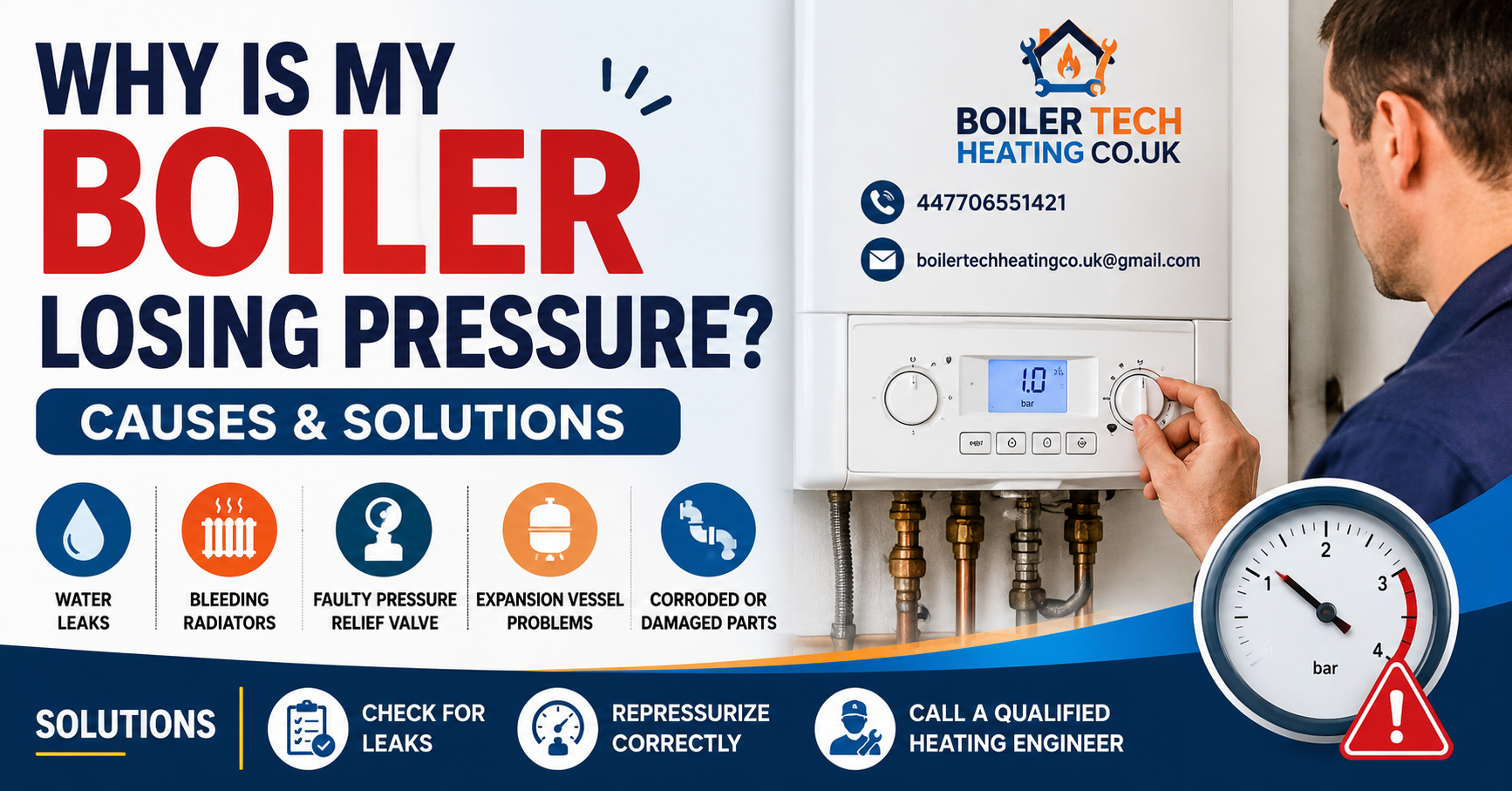
Modern combi, system, and conventional boilers rely on maintaining the correct water pressure to circulate hot water efficiently throughout your home. If the pressure becomes too low, your boiler may stop working altogether or display an error code. Understanding why this happens can help you identify whether it’s a simple DIY fix or an issue that requires a qualified heating engineer.
This guide explains the most common causes of boiler pressure loss, practical solutions, and preventative maintenance tips to keep your heating system operating efficiently throughout the year.
Understanding Boiler Pressure
Boiler pressure refers to the force that pushes heated water around your central heating system. Without adequate pressure, water cannot circulate effectively through radiators and pipework, reducing heating performance and hot water efficiency.
Most modern sealed heating systems include a pressure gauge located on the front of the boiler. This gauge allows homeowners to monitor whether the system is operating within the manufacturer’s recommended range.
What Is Normal Boiler Pressure?
For most residential boilers:
| Boiler Status | Recommended Pressure |
|---|---|
| Cold System | 1.0–1.5 bar |
| Heating On | 1.5–2.0 bar |
| Above 3.0 bar | Pressure is too high |
The exact range varies slightly between manufacturers, so always consult your boiler manual.
Why Correct Pressure Matters
Maintaining the correct pressure ensures:
- Efficient heat distribution
- Reduced energy consumption
- Longer boiler lifespan
- Improved radiator performance
- Lower risk of breakdowns
If pressure drops too low, many boilers automatically shut down as a safety precaution.
Common Reasons a Boiler Loses Pressure
Several issues can cause recurring pressure loss. Some are relatively simple to resolve, while others require professional repairs.
Water Leaks in the Heating System
The most common cause of pressure loss is a leak somewhere within the heating system.
Leaks may occur in:
- Radiator valves
- Pipe joints
- Under-floor heating
- Boiler components
- Pump seals
Small leaks are particularly difficult to spot because the escaping water may evaporate before becoming visible.
Signs include:
- Damp patches
- Water stains
- Corrosion around pipework
- Green or white deposits on copper pipes
Even tiny leaks can gradually reduce system pressure over time.
Bleeding Radiators
Bleeding radiators removes trapped air, improving heating efficiency. However, every time air escapes, a small amount of water also leaves the system.
If you’ve recently bled several radiators, it’s perfectly normal for the pressure to drop afterward.
Simply depressurise the boiler using the filling loop according to the manufacturer’s instructions.
Faulty Pressure Relief Valve (PRV)
The Pressure Relief Valve protects the boiler from excessive internal pressure.
If pressure becomes too high, the valve opens to discharge water safely outside through a copper pipe.
Sometimes the valve fails to reseal properly after opening.
Symptoms include:
- Water dripping from the overflow pipe
- Constant pressure loss
- Boiler pressure falling overnight
A faulty PRV usually requires replacement by a Gas Safe registered engineer.
Expansion Vessel Problems
The expansion vessel absorbs the increased water volume created as water heats up.
Inside the vessel is a rubber diaphragm separating water from compressed air.
If:
- the diaphragm ruptures,
- air pressure escapes,
- or the vessel loses its charge,
the boiler pressure may fluctuate dramatically.
Common symptoms include:
- Pressure rising quickly when heating starts
- Pressure dropping after cooling
- Frequent need for depressurisation
An engineer can recharge or replace the expansion vessel if necessary.
Corroded or Damaged Components
Older heating systems often develop corrosion.
Rust gradually weakens:
- Heat exchangers
- Pipework
- Radiators
- Internal boiler seals
Corrosion eventually creates tiny leaks that slowly reduce system pressure.
Routine servicing helps identify corrosion before it develops into expensive repairs.
Signs Your Boiler Is Losing Pressure
Pressure loss rarely occurs without warning. Recognizing the symptoms early can prevent complete system failure.
Pressure Gauge Keeps Dropping
The most obvious indication is a pressure gauge that repeatedly falls below 1 bar.
You may notice yourself topping up the boiler every few weeks.
If pressure continues dropping after depressurisation, there’s almost certainly an underlying fault.
Heating Performance Declines
Low pressure reduces water circulation.
This often results in:
- Cold radiators
- Uneven heating
- Boiler lockouts
- Longer heating times
- Reduced hot water performance
Many modern boilers display specific fault codes indicating insufficient system pressure.
How to Fix Low Boiler Pressure
The correct solution depends entirely on what’s causing the pressure loss.
Depressurising Your Boiler
Many modern boilers can be safely depressurised by homeowners.
General steps include:
- Turn off the boiler.
- Locate the filling loop.
- Open both filling valves slowly.
- Watch the pressure gauge.
- Close the valves when the gauge reaches around 1.5 bar.
- Restart the boiler.
Avoid overfilling the system, as excessive pressure can activate the pressure relief valve.
Checking for Visible Leaks
Before calling an engineer, inspect:
- Radiators
- Pipe joints
- Boiler connections
- Towel rails
- Valves
- Ceiling stains below upstairs pipework
Use dry tissue around fittings to detect slow drips that may not be immediately visible.
When to Call a Heating Engineer
Professional assistance is recommended if:
- Pressure falls daily.
- You suspect an internal boiler leak.
- The pressure relief valve is leaking.
- The expansion vessel is faulty.
- Error codes repeatedly appear.
- The boiler loses pressure despite no visible leaks.
Gas appliances should always be repaired by qualified professionals. In the UK, this means using a Gas Safe registered engineer.
How to Prevent Boiler Pressure Loss
Preventative maintenance significantly reduces the likelihood of recurring pressure problems.
Annual Boiler Servicing
Annual servicing helps identify:
- Early leaks
- Corrosion
- Worn seals
- Faulty valves
- Expansion vessel issues
- Pressure irregularities
According to industry recommendations, regular servicing can improve efficiency while reducing the risk of unexpected breakdowns.
Regular System Inspections
Homeowners should periodically:
- Check the pressure gauge.
- Look for damp patches around radiators.
- Inspect visible pipework.
- Listen for unusual boiler noises.
- Test radiator performance.
Catching minor issues early often prevents expensive emergency repairs.
Conclusion
A boiler that continually loses pressure is rarely something to ignore. While temporary pressure drops after bleeding radiators are perfectly normal, repeated pressure loss usually points to leaks, faulty components, expansion vessel issues, or problems with the pressure relief valve. Understanding these common causes allows homeowners to respond quickly before small faults develop into major heating system failures.
Maintaining the correct boiler pressure not only ensures reliable heating and hot water but also improves energy efficiency and extends the lifespan of your central heating system. Regular inspections, annual servicing, and prompt repairs can prevent recurring problems and reduce long-term maintenance costs. If your boiler frequently needs depressurising or you notice persistent pressure loss without an obvious cause, contacting a qualified heating engineer is the safest and most effective solution.
Frequently Asked Questions (FAQs)
1. Why does my boiler keep losing pressure?
A boiler usually loses pressure because of a water leak, a faulty pressure relief valve (PRV), a damaged expansion vessel, or air released after bleeding radiators. If the pressure drops frequently, it’s best to have the system inspected by a qualified heating engineer.
2. Is it normal for a boiler to lose pressure over time?
A slight drop in pressure over several months can be normal. However, if your boiler loses pressure every few days or weeks, it often indicates an underlying problem that needs attention.
3. What is the ideal pressure for a boiler?
Most domestic boilers should have a pressure between 1.0 and 1.5 bar when the system is cold. When the heating is running, the pressure may rise to around 2.0 bar, which is generally considered normal.
4. Can I depressurise my boiler myself?
Yes, many modern combi boilers can be safely depressurised using the filling loop. Always follow the manufacturer’s instructions and avoid exceeding the recommended pressure level.
5. Does bleeding radiators cause boiler pressure to drop?
Yes. Bleeding radiators releases trapped air along with a small amount of water, which can reduce system pressure. After bleeding your radiators, you may need to top up the boiler pressure.
6. How can I tell if my boiler has a leak?
Signs of a leak include damp patches, dripping water, corrosion on pipes, stained ceilings, or a pressure gauge that continually drops. Some leaks are hidden and may require professional leak detection.
7. Is a boiler losing pressure dangerous?
Low boiler pressure itself is not usually dangerous, but it can reduce heating efficiency and cause your boiler to stop working. If you suspect a gas leak or notice water leaking from the boiler itself, turn the boiler off and contact a qualified engineer immediately.
8. Why does my boiler lose pressure when the heating is off?
If the pressure drops even when the heating is switched off, it may indicate a hidden water leak, a faulty pressure relief valve, or an issue with the expansion vessel that requires professional repair.
9. How often should I have my boiler serviced?
Most manufacturers recommend servicing your boiler once a year. Annual servicing helps identify leaks, worn components, and pressure-related issues before they become costly repairs.
10. When should I call a heating engineer for low boiler pressure?
You should contact a qualified heating engineer if your boiler loses pressure repeatedly, needs frequent depressurising, displays fault codes, or if you notice visible leaks, unusual noises, or water escaping from the pressure relief pipe.
